
Pleated filter cartridges
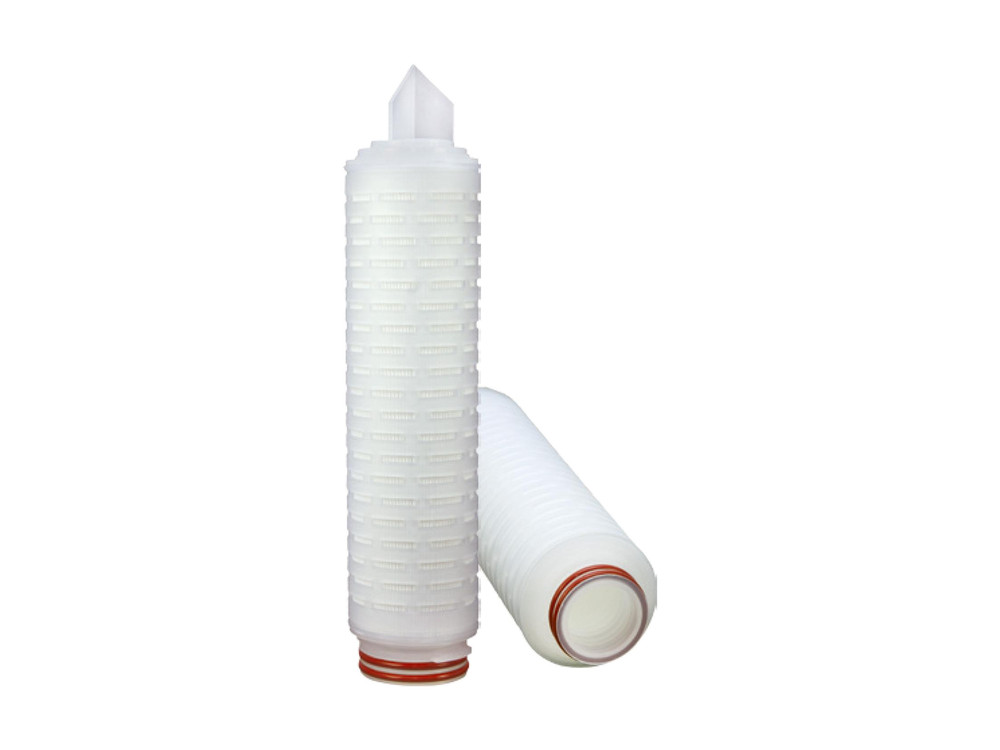
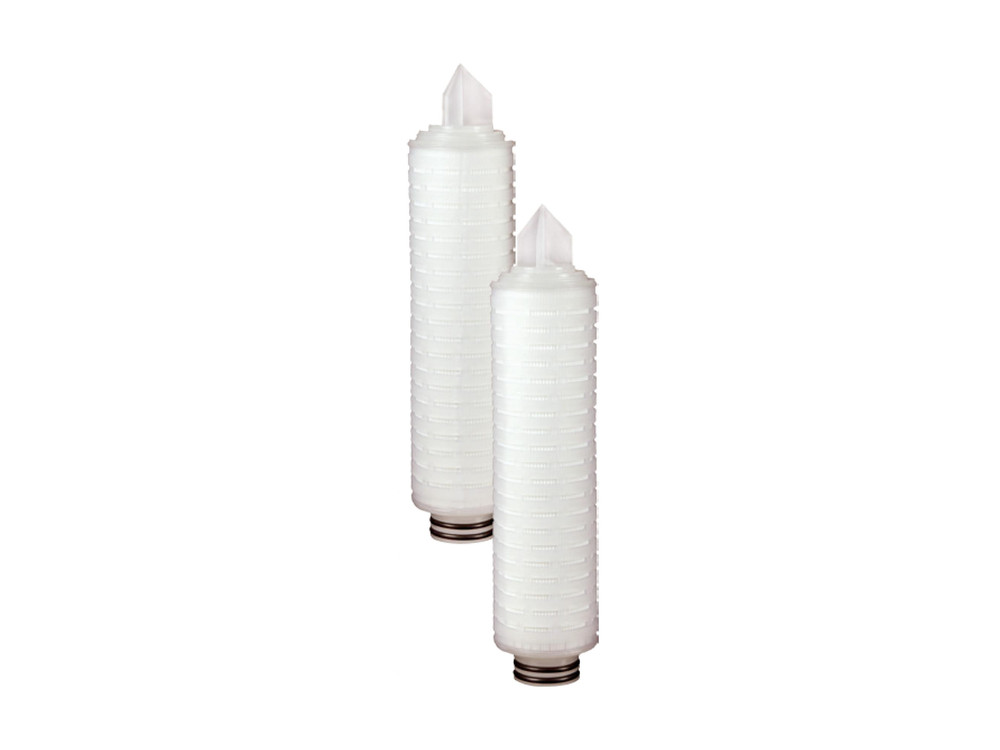
Twelve media families, 0.01 to 10 microns, in 10" to 40" elements. Pleated media is folded rather than wound, so a 10-inch element carries several times the surface area of a melt-blown one at the same rating — which is what buys the longer service life.
Why pleated
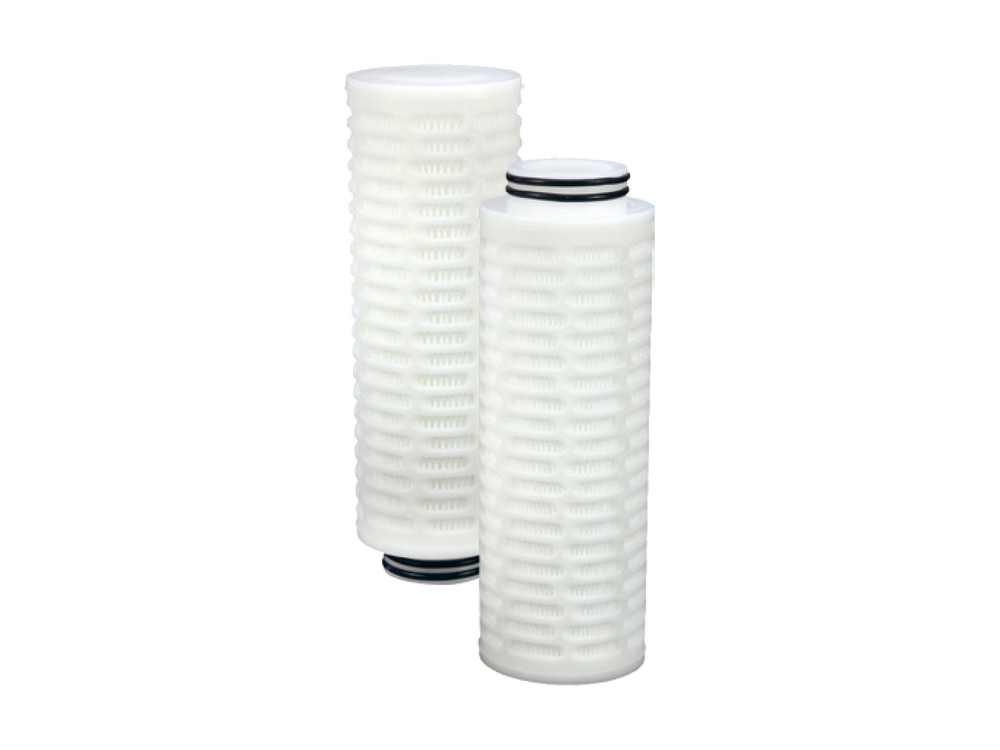
A melt-blown element is a cylinder of fibre. A pleated element is the same cylinder with the media folded back and forth inside it, so the effective filtering area per unit length is several times larger. For the same micron rating and the same flow, that means the differential pressure climbs more slowly and the element lasts longer before it has to come out.
The trade is that pleated media sits behind a support layer and a cage, so it is a manufactured assembly rather than a wound sleeve. That is why the construction details — how the pleats are welded, whether there is any adhesive in the flow path — matter as much as the polymer does.
On our elements the components are thermally welded rather than glued, so there is no adhesive in the flow path and no glue line to fail under repeated cleaning.
Choosing the media
This is the decision that actually drives everything else. Polymer first, rating second.
| Series | Media | Rating | Choose it for |
|---|---|---|---|
| ZJ83 | PP / PES / PTFE / hydrophobic PTFE, 83 mm | 0.01–10 µm | General chemical filtration where the housing takes a slim element |
| ZJ131 | Same media set, 131 mm | 0.01–10 µm | The same duty where a larger element is wanted for flow |
| ZJAPP | Hydrophilic PES membrane | 0.01–10 µm | Water and aqueous streams; high flow at low pressure drop |
| ZJBPP | Hydrophilic PES membrane | 0.01–10 µm | Same family, wider length range for larger housings |
| ZJGPP | Ultra-fine glass fibre in PP | 0.01–10 µm | High dirt-holding at fine ratings; nominal duty |
| ZJIPP | Multi-layer ultra-fine glass fibre | 0.01–10 µm | Graded depth for heavy particulate loads |
| ZJPES | Imported asymmetric PES on non-woven support | 0.01–5 µm | Sterile filtration, electronics, and beverage polishing |
| ZJGF | Glass fibre | 1–10 µm | Gas and air filtration; also viscous liquid duty |
| ZJHPTFE | Hydrophilic PTFE | 0.01–10 µm | Aqueous streams that would attack PP or PES |
| ZJPTFE | Hydrophobic PTFE | 0.001–3 µm | Gas, air and aggressive chemical service |
| ZJNL | Nylon 6 / Nylon 66 | 0.01–3 µm | Hydrocarbon and solvent duty; pharma and cosmetics |
| ZJPVDF | Hydrophilic PVDF | 0.01–3 µm | Strong acids and oxidising chemistries; high purity water |
Ratings shown are the ranges published in the product catalogue. The rating you need is set by what has to be caught and what the downstream stage will tolerate — not by the tightest figure available.
Construction and operating limits
Materials of construction
| Part | Material |
|---|---|
| Filtration medium | PP / PES / PTFE / glass fibre / Nylon / PVDF |
| Support / drainage | Polypropylene |
| Cage, core, end caps | Polypropylene |
| Seal | Silicone, EPDM, Viton, encapsulated FEP |
| Jointing | Thermally welded — no adhesive in the flow path |
Operating limits
| Parameter | Value |
|---|---|
| Maximum working temperature | 80 °C (90 °C on PTFE and PVDF) |
| Maximum differential pressure | 4 bar @ 25 °C |
| 2.4 bar @ 80 °C | |
| Outside diameter | 69 mm standard; 83 mm and 131 mm on the ZJ83 / ZJ131 series |
| Lengths | 10", 20", 30", 40" (5" on selected media) |
| Integrity | 100% tested in production |
End caps, seals and the code that carries them
| Field | Letters | Meaning |
|---|---|---|
| End cap | F | Double open end (DOE) |
| M | 222 flat / plug | |
| P | 222 finned | |
| T | 226 flat | |
| Q | 226 finned | |
| Seal | S | Silicone |
| E | EPDM | |
| V | Viton (FKM) | |
| T | Encapsulated FEP | |
| Length | 05 / 10 / 20 / 30 / 40 | Inches |
ZJPES-0100-20-M-S — PES membrane, 1.0 µm, 20 inch, 222 flat end cap, silicone seal. Match the end cap to the housing you already have; that field is the one that causes most returns.
Related: model code & specifications · selection guide
Tell us the chemistry and the housing
pH, temperature, solvent, oxidant, and the element size and end cap you are running now. That is enough for us to name the media, the rating and the seal — and to say when a cheaper element will do.
Send your duty