
Column ultrafiltration modules
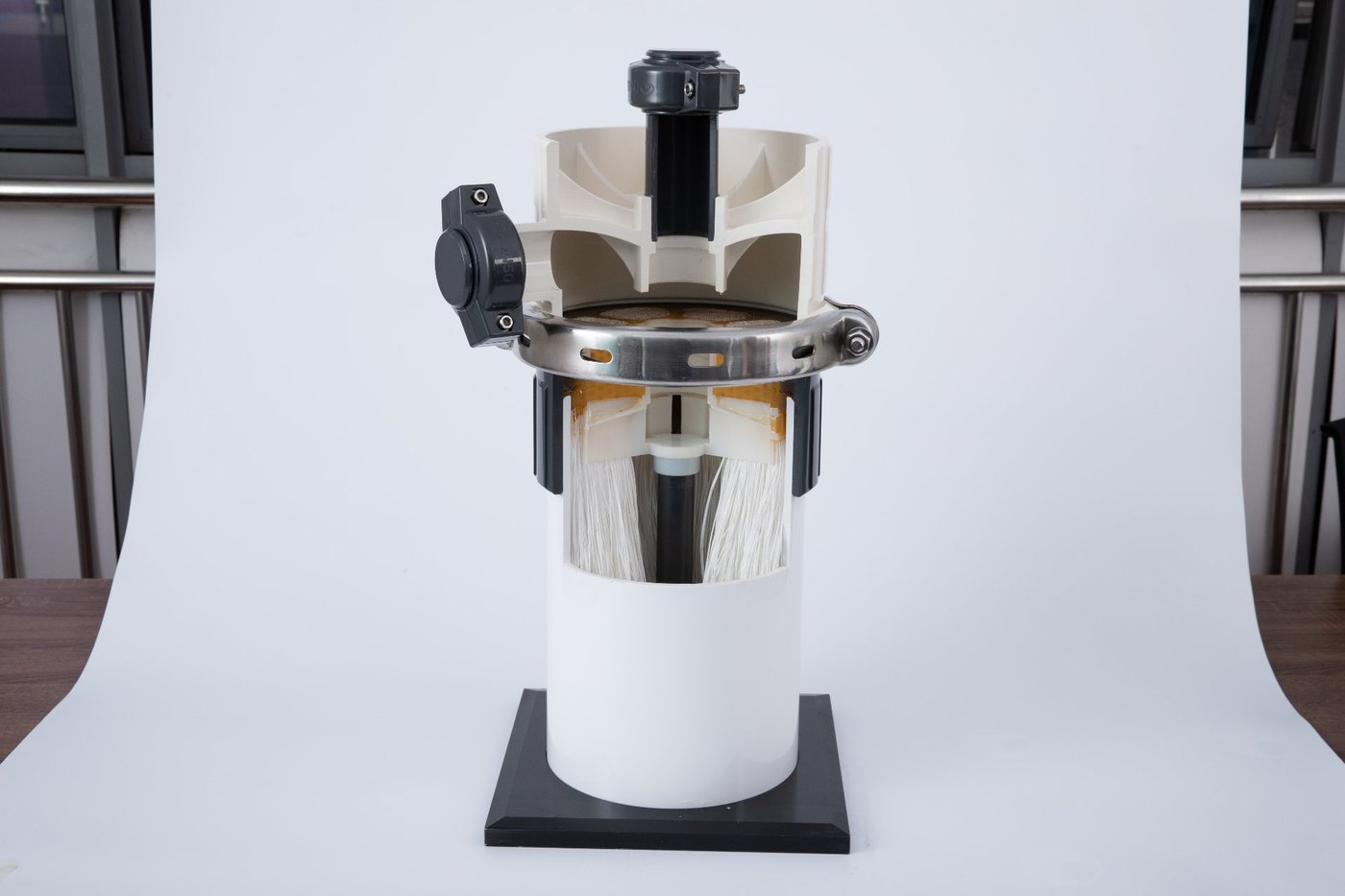
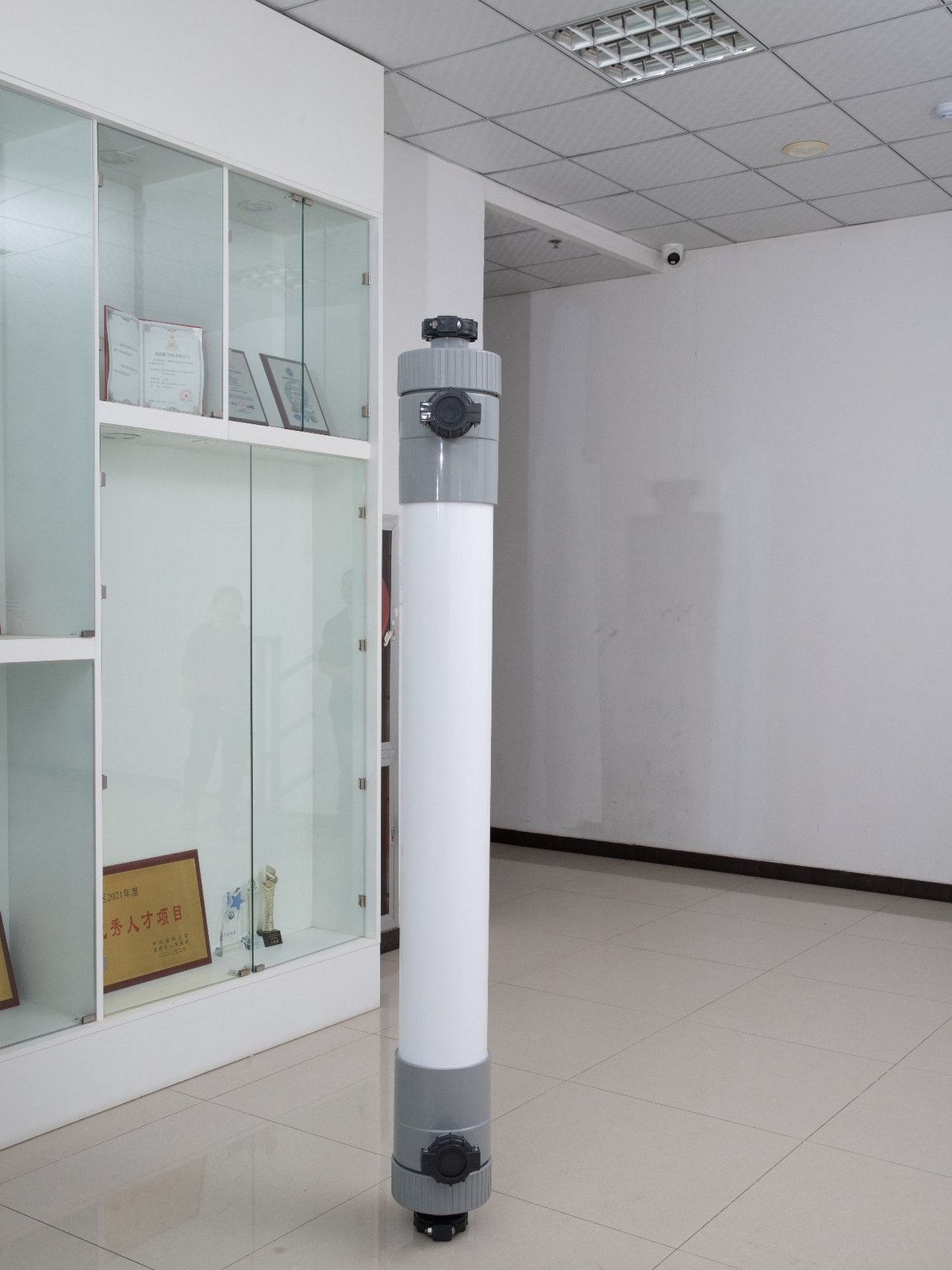
A vertical module in a pressure housing. Feed enters the shell, water crosses the fibre wall into the bore and leaves through the centre tube. Solids stay on the outside and are washed off by a backwash. It bolts into a pipe run — there is no tank and no cassette.
Where a column module earns its place
This form is chosen when the water is already reasonably clean and the plant needs the membrane compact, enclosed and easy to clean without opening anything.
- The feed has been pre-treated. Media filtration, clarification or a screening step ahead of it. The module tolerates fines, not rags or grit.
- It stands in the pipe run. Vertical modules stack against a wall or on a skid. Retrofits into an existing room are usually the reason this form wins.
- Cleaning is hydraulic. A backwash reverses flow through the wall and lifts the cake off; a chemical clean is occasional, not part of the cycle.
- The housing is the pressure boundary. The fibre bundle is potted into it, so the module is a single replaceable part rather than an open tank of elements.
The three forms, side by side
All three separate by the same pore. What differs is what the feed path will let through, and what it costs to clean.
| Curtain MBR | Tubular UF | Column UF | |
|---|---|---|---|
| Feed it can take | Mixed liquor in the aeration tank | High solids, oil, fibre — the bore passes them | Pre-treated water: fines, colour, turbidity |
| Driving force | Suction from the permeate side | Recirculation loop, crossflow across the bore | Feed pressure, outside-in |
| How it is cleaned | Air scour rising past the bundle | High crossflow velocity, then chemical | Backwash through the wall, then chemical |
| Footprint | A tank | Long runs of pipe and supports | Compact, vertical, against a wall |
| Usual position | Biological stage | High-solids and oily wastewater, softening | Surface water, reuse, RO and seawater pre-treatment |
Same separation principle in all three. The choice is about the feed, not about which membrane is better.
What the module is made of
Fibre
Hollow fibre with the separation skin on the outside, so the wall is backwashed from the inside out. Material is selected against the feed — oxidant load and pH matter more than the nominal pore size.
Potting and housing
The bundle is potted at both ends into the housing, which is also the pressure boundary. End caps carry the feed, permeate and backwash connections; the top cap is where the centre tube terminates.
Connections
Vertical inlet at the bottom, permeate at the top, drain at the lowest point. Unions and clamps are sized so a module can be lifted out and swapped without cutting pipe.
Pore size, membrane area, module dimensions, design flux and the pressure envelope are quoted per project. We do not publish a single set of numbers for this form because the duty decides them.
From the shop floor
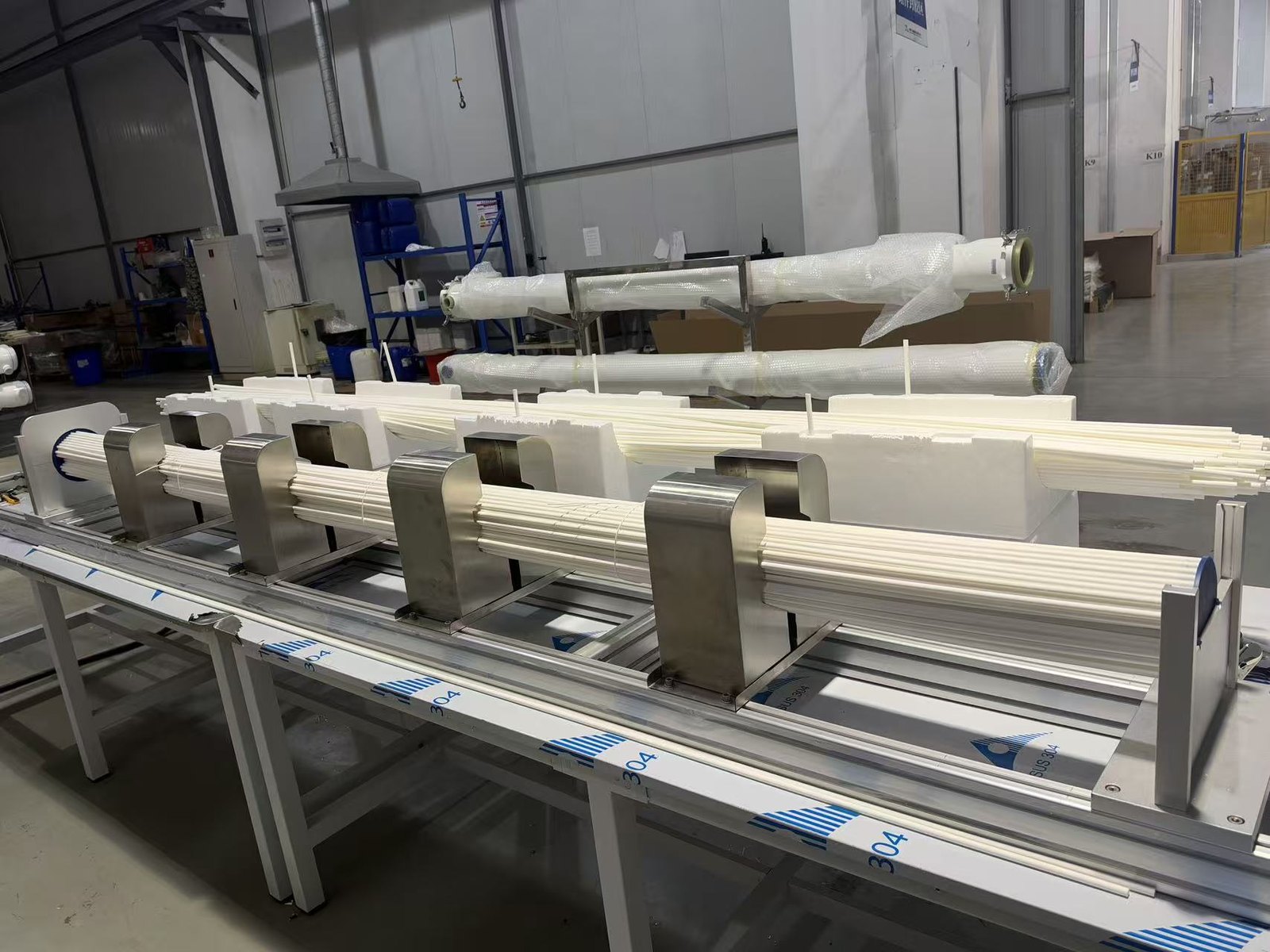
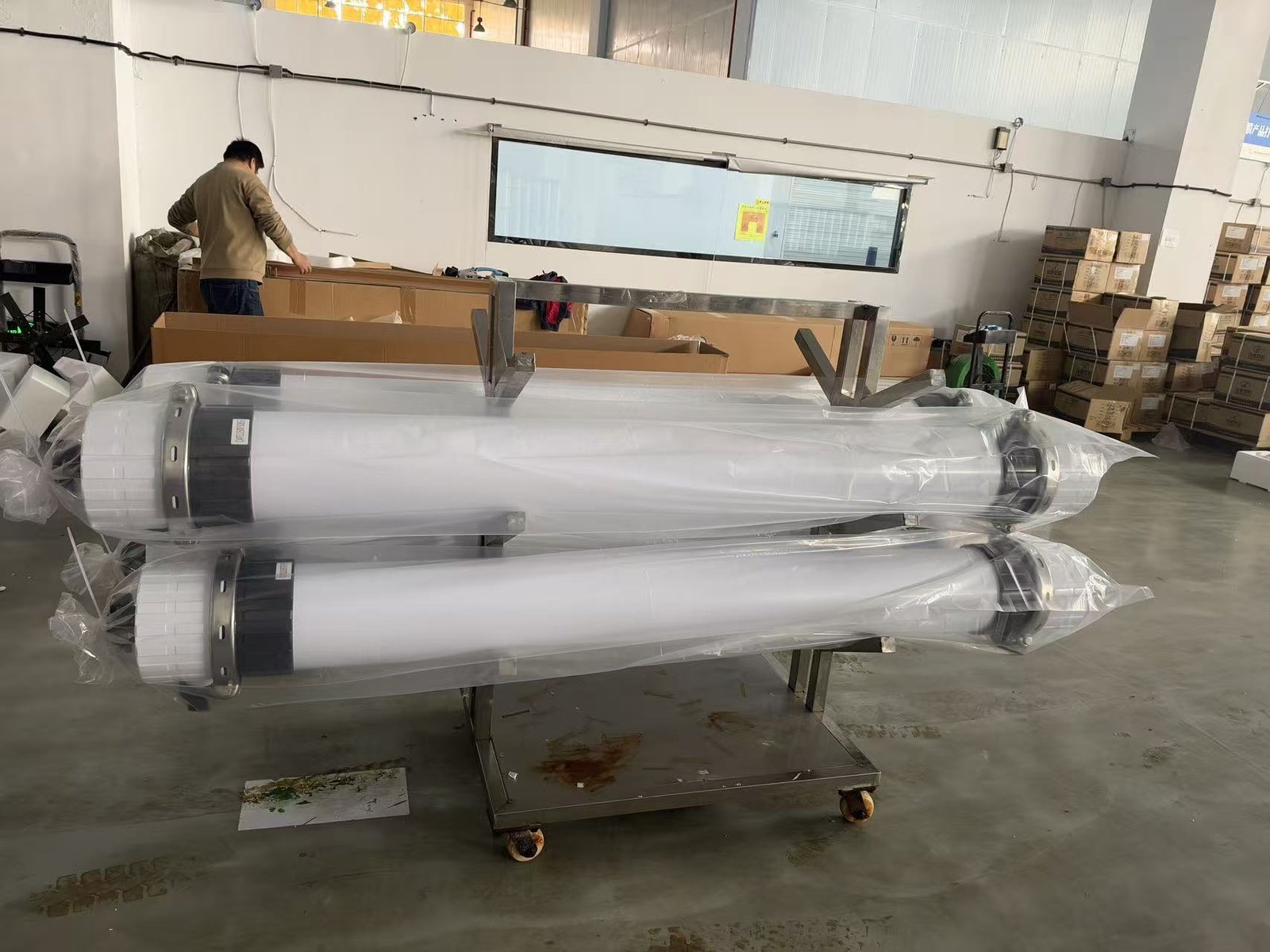
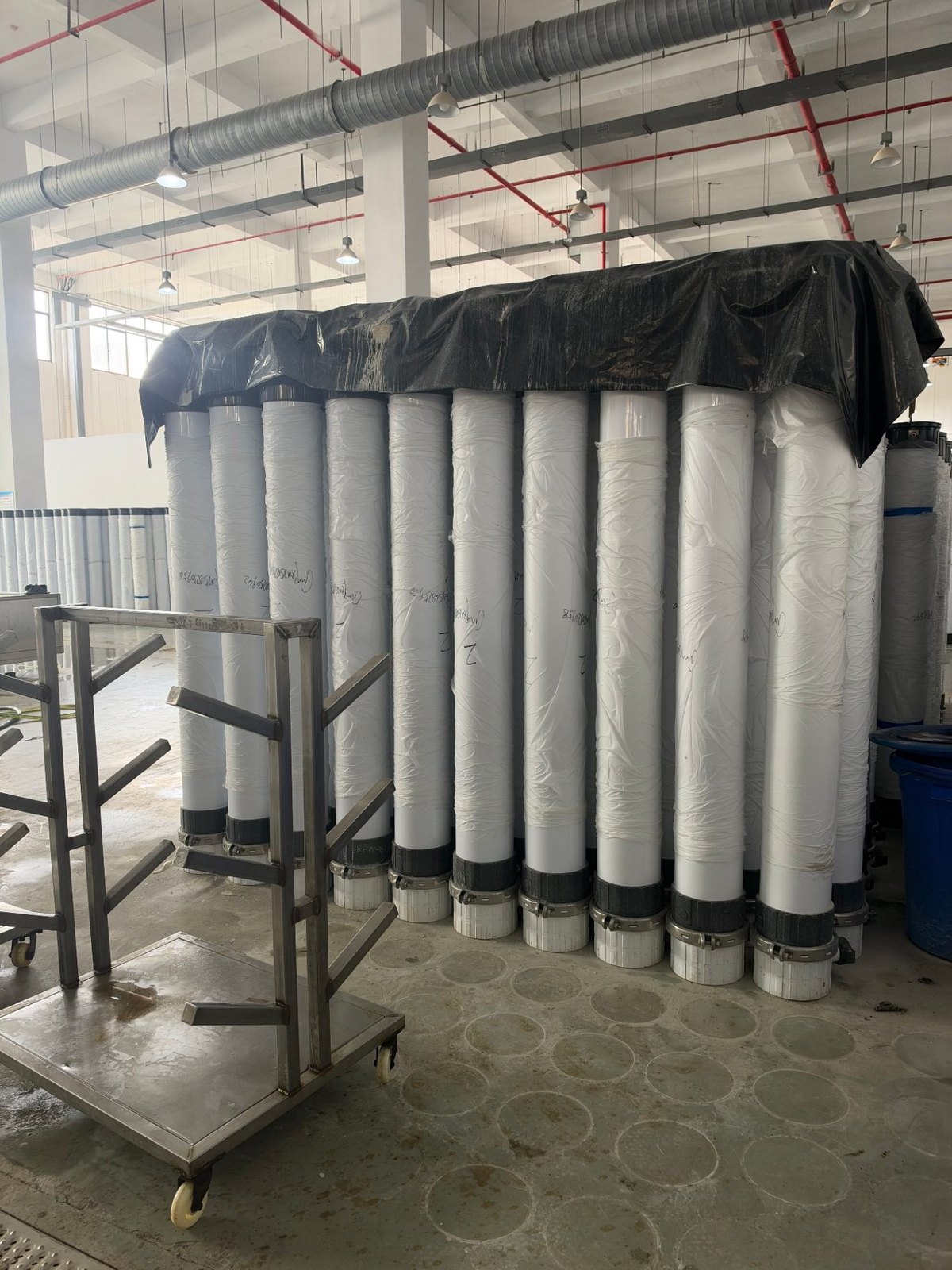
Photographs of the modules we build, not renders.
Send the water analysis and the flow, and we will size it.
Turbidity, SDI and what sits upstream decide whether a column module is the right form at all. If it is not, we will say so.
Send your duty Request a pilotRequest for quotation
Send the feed data, get a model recommendation
A short note is enough to start. We reply with the suggested membrane type and the specification sheet for your conditions.
- Selection by feed conditions, not by a catalogue page
- Samples and pilot testing can be arranged
- Quotation and minimum order are confirmed case by case